
Getting someone out: $80–$180
Standard Sydney call-out for after-hours attendance. Ask before booking, not after the invoice.
Genuine round-the-clock cover across Cammeray. You get an honest ETA rather than a flattering one, a fixed price before work starts, and on the calls that can safely wait, you get told that too.
After-hours work is not the same trade as daytime work. The parts have to be on the van because no supplier is open, the diagnosis has to be right first time because there is no second attendance that night, and the person answering the phone has to be able to tell a genuine emergency from something that is cheaper on Monday.
That last part matters more than it sounds. Telling you a job can safely wait costs us the callout and saves you a premium, and it is the fastest way to know whether the outfit you have rung is worth using again.


The slowest part of an apartment emergency is often not the plumbing — it is the door. Fob access, a basement that needs a resident to open it, a car park with no after-hours entry: any of those can add half an hour while water is still running.
Unit blocks near Miller Street share sewer stacks that clog with wipes, grease and fat, needing a proper jet clear rather than a plunger.
Two things worth doing before you ever need them: find your lot's isolation valve — usually in the laundry or a hallway cupboard — and save the building manager's after-hours number in your phone. Both take five minutes on a calm evening and both save real time on a bad one.
The genuine emergency in an older home is often not the size of the fault but the lack of an alternative. A single bathroom out of action with a family in the house is a call-out, whatever the textbook says about severity.
Early-1900s homes still run original earthenware drains that crack and dip with age, snagging debris and backing up.
We treat it that way. If it is the only toilet, it goes to the front of the queue — and if we can talk you through getting it usable tonight so the visit can happen at daytime rates tomorrow, we will do that instead and say so on the phone.
Around Cammeray we work with premises where closing for a day is not a small inconvenience — it is the week's takings and a shift's wages.
So we work to the opening time, not to ours. That means arriving after close where that suits you better, telling you early if the fix will not hold until trade, and giving you the documentation your insurer or landlord will ask for afterwards.
Two separate systems run under most properties around Cammeray: stormwater, which takes rain from roofs and yards, and sewer, which takes everything from inside the house. They are not supposed to meet.
Cammeray sits on Sydney’s Lower North Shore (postcode 2062), a leafy pocket bordering Crows Nest, Northbridge, North Sydney and Naremburn. Its steep gullies drop toward Tunks Park and Middle Harbour, and that terrain shapes almost every drainage problem we see here.
When they do — an illegal connection, a cracked line, a surcharging pit finding its way into the wrong pipe — heavy rain overwhelms a system never built for it, and the symptoms appear indoors. Working out which system has actually failed is the first thing we do, because the repair, the cost and who is responsible all follow from it.
One slow basin is a local problem. Toilet, shower and floor waste misbehaving together means the shared line downstream, and on older earthenware that is the usual pattern.
Established fig and jacaranda-lined streets sit above old clay sewers, and roots working into the joints are the number-one cause of blockages in Cammeray.
It also changes the urgency. A single blocked fixture can wait for morning; a main line with nowhere to go will find the lowest opening in the house, and that is usually a floor waste in the bathroom.
A drainage system laid a century ago was built for a household that used a fraction of the water yours does. Add a second bathroom, a dishwasher and a washing machine, and lines that coped for decades start showing where they are weakest.
That is not an argument for replacing everything. It is an argument for knowing which sections are actually tired, so the money goes into those rather than into the whole run on the assumption that old means finished.
Before anything else, work out whether the failure sits inside your lot or on common property, because that decides who authorises the work and who is billed. As a rule of thumb: a fixture, a tap or pipework serving only your apartment is usually yours; a stack, a shared sewer line or a stormwater pit serving the building is usually the owners corporation's.
If it is after hours and the building manager is unreachable, we attend, make it safe, and write the report so it names the line and the lot. That report is what settles the invoice question later, and it is far easier to produce on the night than to reconstruct a fortnight afterwards.
Standard Sydney call-out for after-hours attendance. Ask before booking, not after the invoice.
Roughly $120–$160 in daylight. Someone is out of bed and on the road, and the rate reflects it.
Where most single-fault after-hours jobs land once attendance, labour and small parts are counted.
Slab leaks, gas line work, anything that means opening a wall overnight. You approve the figure first.
We would rather book you for Monday at daylight rates than take a premium for a job that was never urgent.
The price is agreed before work starts, including at 2am. Figures here are indicative of the 2026 Sydney market rather than a quote from us, you get your own number as a fixed price before any work starts.
Not a call centre. You describe what is happening, we tell you what to shut off right now, and whether this genuinely needs someone tonight. Sometimes it does not, and we say so.
The nearest available crew heads for Cammeray with the common failure points already stocked on the van: pipe, fittings, valves, drain gear.
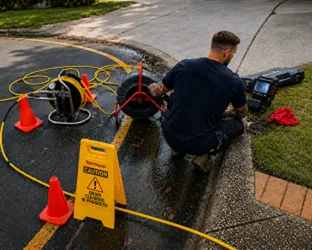
First job on site is stopping the damage: isolate, contain, make safe. Then you get a fixed price for the proper repair before it starts.

Most emergencies are permanently repaired on the spot. If a part has to wait for a supplier, you are left safe, watertight and functioning in the meantime.
Leave your details and an on-call plumber rings back. You will get instructions on what to isolate before anything else.
Call for the fastest response, any hour. Or send the form, after-hours enquiries get a callback from the on-call plumber, not an inbox.

Leave your details and our local Cammeray team will call you back fast.